The “foundation” is the apostles and prophets...none of whom were white or European. We need seminaries to have students read better church history that tracks Christianity in North Africa and the East so we don’t jump from St Paul to Calvin and Luther!
英語では、最近 Paul Within Judaism という視点が大分取り上げられるようになってきた。簡単に言うと、パウロは回心後もユダヤ教から出ていない、という見方だ。
興味深いので新改訳2017だけでなく、N.T.ライトの個人訳新約聖書であるKNT(Kingdom New Testament)の訳文を引用しておこう。
13 You heard, didn’t you, the way I behaved when I was still within ‘Judaism’. I persecuted the church of God violently, and ravaged it. 14 I advanced in Judaism beyond many of my own age and people; I was extremely zealous for my ancestral traditions.
[2018/8/14 追加] ※N.T.ライト読書会ブログに「Paul within Judaism」をアップしました。
この記事で書いたことのアカデミック版のようなものです。ほぼすべて英語ですが、ネットで読める関連記事を色々紹介しています。
Contents
1. Introduction: Christian Postliberalism and the Jews
Part 1: American Protestant Postliberalism
2. George Lindbeck and the Church as Israel
3. Robert Jenson: The God of Israel and the Fruits of Trinitarian Theology
4. Arguing for Christ: Stanley Hauerwas's Theopractic Reasoning
5. The Limits of Postliberalism: John Howard Yoder's American Mennonite Church
Part 2: British Postliberalism
6. Finding Christ in World and Polity: Daniel Hardy's Ecclesiological Postliberalism
7. Wisdom's Cry: David Ford's Reparative Pneumatology
8. John Milbank: Supersessionist or Christian Theo-semiotician and Pragmatist?
9. Conclusion: Christian Postliberalism and Christian Nonsupersessionism Are Correlative
ざっくり言えばキリスト教はユダヤ教の一派であり、数世紀かかって二つは「分離(the parting of the ways)」したのだ。
原始キリスト教会の「ユダヤ教とキリスト教の関係」そしてある時から「二つが袂を分かった(the parting of the ways)」ことについては、最初にそれとして関心を持ったのは、Graham N. Stanton, A Gospel for a New People: Studies in Matthew を読んだ時だった。 スタントンはこの本の「パート2」でマタイ福音書(マタイ教団)の背景としてユダヤ人会堂からの分離問題を取り上げているのだが、この「分離」がほぼ一世紀中には終了している風な印象を抱いた。 しかしスカルサウネ編論文集を読むと場所にもよるが、その後数世紀に渡って関係が続いたと言うことを知った。
Due to a variety of complex circumstances, the Western church, known
today as the “Roman Catholic Church,” split from the Eastern Orthodox
Patriarchates of Constantinople, Jerusalem, Alexandria, and Antioch in
the 11th century. Roman Catholics, however, see it from the opposite
perspective, namely that the Orthodox Church broke communion with the
Roman Catholic Church.
In criticizing the various “dynamic equivalence” models of translation, I
lament what Robert Alter calls “the heresy of explanation””“the use of
translation as a vehicle for explaining the Bible rather
than representing it in another language, [which] in the most egregious
instances . . . amounts to explaining away the Bible.”
But I guess I am, as a translator, what in constitutional law would be
called an “originalist.” That is, I want to try to convey in English
what I think were the actual values and mind-sets of the ancient Hebrew
writers, which is also, in the poetry, inseparable from the concreteness
of their language and the compactness and rhythmic force of the poetry
they wrote.
Jews as well as Christians have imposed very postbiblical
theologies and concepts on the Bible, but these have often been
articulated in commentary far more often than in translation, because
through the centuries most (not all) communities of Jews were not
dependent on translations of the Hebrew. In the English-speaking world,
the versions of the Bible we have had have certainly been suffused with
Protestant theology, and, as an originalist, I have tried to scrape all
that away.
The literal sense is exactly what it says in the book of Leviticus and the book of Deuteronomy.
A person does not become impure by putting things into the body but by the things that come out from the body.
And then he says, "Let him who has ears to hear hear," which means this is a parable and has a figurative meaning.
「その後イエスは弟子たちに『まだこのたとえが分からないのか』(と言い)
and he explains, the things that go into the body don't make us impure but the only things that come out to TEACH US SOMETHINGS, namely, to teach us the MORAL and RELIGIOUS POINTS that when we think evil thoughts...when we do evil things, when we speak evil things, that we are behaving in a wrong way.
新共同訳で「底本」、「異本」辺りのことについて追加すれば、
(3)United Bible Societies編のギリシャ語新約聖書
では、16節の欠落については「B」判定となっていて、(この判定を解説する)メッツガー編のA Textual Commentary on the New Testament、では
This verse, though present in the majority of witnesses, is absent from important Alexandrian witnesses... It appears to be a scribal gloss (derived perhaps from 4.9 or 4.23), introduced as an appropriate sequel to ver. 14.
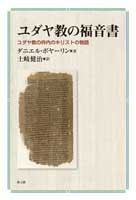
Daniel Boyarin, Taubman Professor of Talmudic Culture and rhetoric at
the University of California, Berkeley, is the recipient of numerous
awards and fellowships. His books include A Radical Jew, Border Lines,
and Socrates and the Fat Rabbis. He lives in Berkeley, California.
教授は「聖書神学」と言って、その頃はまだ神学校の受講科目ではメジャーになっていなかった部門を担当していた。
と言うことで(確か)先ず紹介されたのは、クリスター・ステンダールの「聖書神学」と言う論文(The Interpreter's Dictionary of the Bible所収)だったかと思う。
筆者の見るところ福音派自身の中から環境問題に初めてスポットライトを当てたのはフランシス・シェーファーではなかろうか。
彼の、Pollution and the Death of Man. A Christian response to issues concerning ecology.(1970年)にはアペンディックスとして例のリン・ホワイトの論文も収録されている。
The honour and glory that crowns the human race is possession of the earth, which is granted as the culmination of God's creative work: "Be fruitful and multiply, fill the earth and subdue it." This notion is fortified in Psalm 115: "The heavens are the Lord's heavens, but the earth God has given to humanity." While the creation narrative clearly establishes God as Master of the Universe, it is the human being who is appointed master of the earth.
しかしサックス師はこの「支配」の解釈のニュアンスを「管理者、ケアーする者」の方向に導いていく。
Genesis chapter 1 is only one side of the complex biblical equation. It is balanced by the narrative of Genesis chapter 2, which features a second Creation narrative that focuses on humans and their place in the Garden of Eden. The first person is set in the Garden "to work it and take care of it."
この創世記1章と2章のバランスから導き出される人間観は、
We do not own nature - "The earth is the Lord's and the fullness thereof." (Psalm 24:1) We are its stewards on behalf of God, who created and owns everything. As guardians of the earth, we are duty-bound to respect its integrity.
The choice is ours. If we continue to live as though God had only commanded us to subdue the earth, we must be prepared for our children to inherit a seriously degraded planet, with the future of human civilisation put into question. If we see our role as masters of the earth as a unique opportunity to truly serve and care for the planet, its creatures, and its resources, then we can reclaim our status as stewards of the world, and raise our new generations in an environment much closer to that of Eden.